Lake Kivu Risk: How Dangerous Is This Eruption?
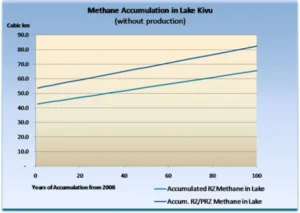
Four years ago I wrote this article on the dangers of Lake Kivu’s gas resource. Its eruptive potential is huge, enabled by a stored gas volume of about 80% of its 500 cubic km water volume. Its renewable gas inventory is growing at perhaps 0.5% a year, arguably, so it can erupt with a very large, sudden energy injection. But will that eruption happen now with the 22 May eruption and the follow-on seismic activity? How serious was this event and what does it say about the risk level?
Where Geological Forces Shape Our Mission
Is There a Way of Preventing an Eruption or Reducing the Risk of One Now?
Yes, but there is no instant panacea. We have the means of progressively reducing the risk of an eruption by producing gas from the lake. Extraction needs to be faster than new gas formation but must be done strictly according to the rules to reduce danger. It takes time and long-term, consistent application of the safety rules.
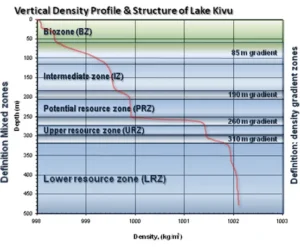
A key concern among experts is that several developers on Lake Kivu have skirted the rules, resorting to legal arguments to avoid being subject to the mandatory and legally recognised Management Prescriptions. The Lake Kivu Monitoring Program (LKMP) has been observing the impact of discharge plumes from all production barges. The rules on the discharge of degassed water and wash water are strict. They are required to protect against disruption of the stability structure of the lake – the best of all defences against an eruption. There is evidence of a concerning level of weakening of the gradient layers as the result of non-compliance, where such disallowed re-injection plumes are breaking through gradients. The damage will soon be irreversible.
A compliant extraction technology, working strictly to the rules, has the ability to reduce the level of risk of a lake eruption by as much as 90% within ten years and by as much as 99% within 20 years. While this de-risking is significant, it takes time to be fully effective and that takes investment to build out the required capacity.
A full-scale de-risking project will take billions of dollars. The upside of that is that the optimal energy derived from degassing the lake can earn 15-20 times as much as the capital spent. So degassing is commercially viable. Among many benefits, it can make the two countries that share the lake net zero in terms of carbon emissions while saving lives too. There is a potentially very good economic result that can come out of de-risking the danger of Lake Kivu, as long as it is done the right way.
Is Lake Kivu going to erupt this time?
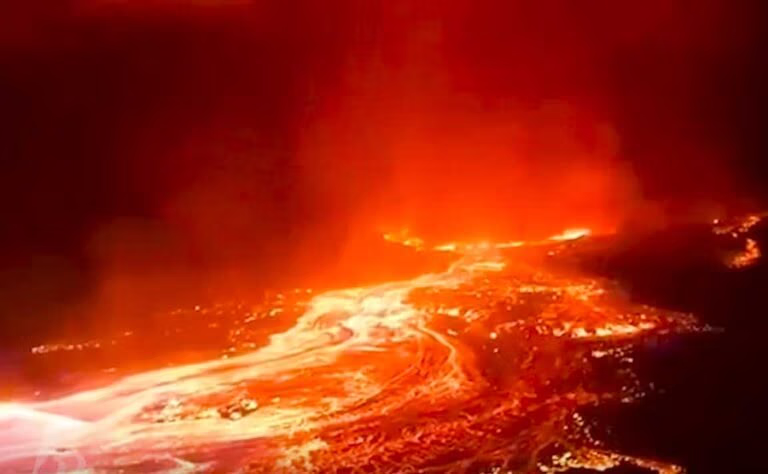
Almost certainly not. This is a bold statement but made with sufficient certainty with the facts available. Considering all the above factors the recent eruption of Mt Nyiragongo, through a flank eruption. It released much of the built-up energy in the system by draining the caldera. It will take time, perhaps as much as a decade, to rebuild the lava lake in the main crater after this release. The lava lake is a better safety valve for the magmatic system than a lava lake that has solidified. The last flank spill, a bigger event than this one with lava penetrating Lake Kivu to 80m depth, occurred in January 2002.
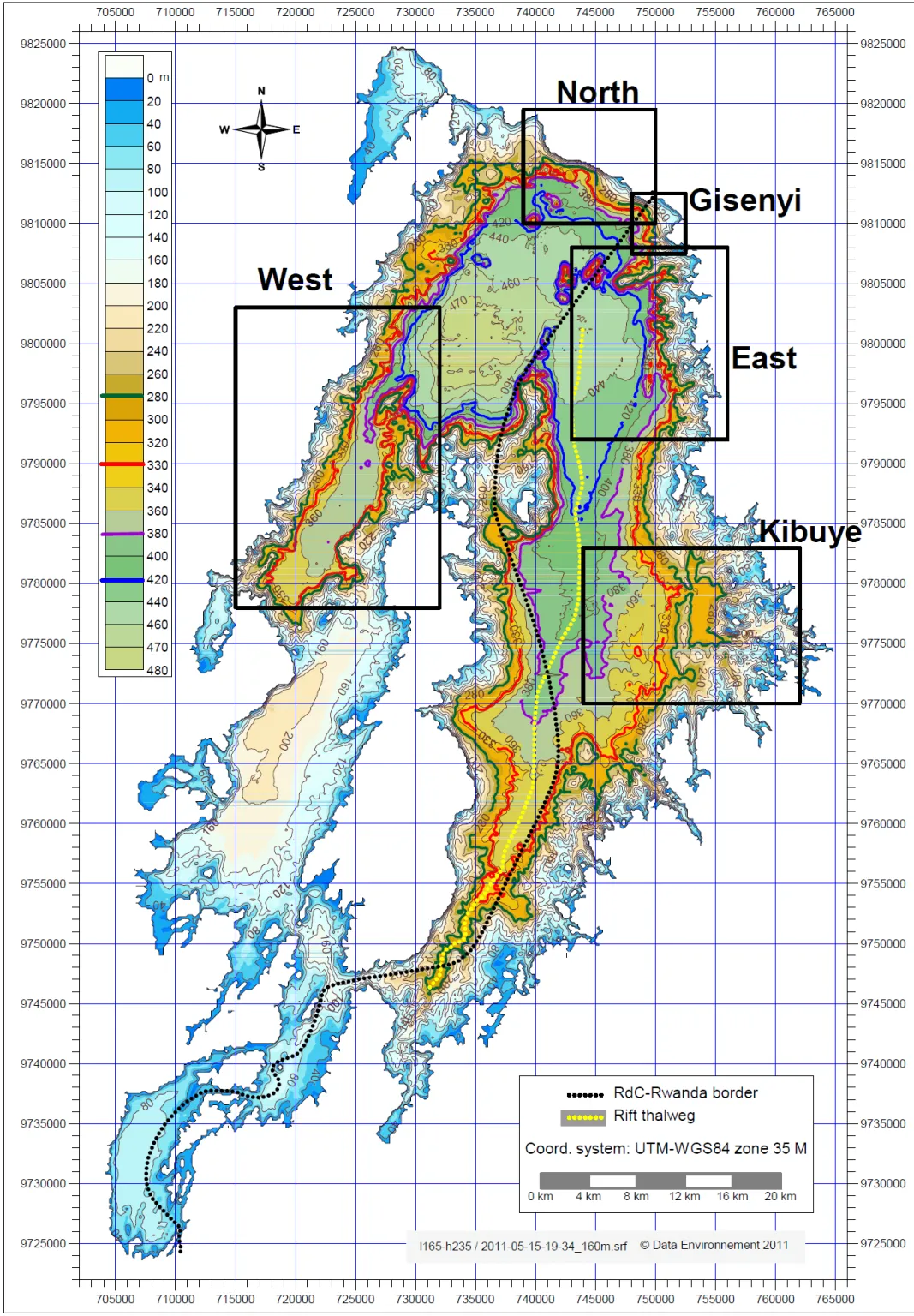
Another form of danger is for a large seismic rift to open up, but that occurs through a separate mechanism and is less predictable. Darchambeau, a seismologist who has spent years studying Lake Kivu, monitors the seismic events that show up as a wedge of around a hundred events, running north-south 30km into the lake from close to the Rwanda/DRC land border.
We must acknowledge the work of the Observatoire Volcanologique de Goma in collecting and reporting data. Celestin Kasarkea Mahinda and his small team work diligently, with virtually no regular budget, to maintain monitoring of the volcanos and to share reports on the danger levels based on their observations. Here is a recent report that commented on concerns emanating from journals of rising lava levels in the crater lake. COMMUNIQUE (version française)
Their monitoring equipment is only accessible through climbing the mountain and it is too frequently vandalised. However, their information gathering is much improved on that available in 2002. The observatory’s view before this volcanic eruption was that vigilance was required, not panic. Even now there is a a tendency to panic and a lack of coordinated information sharing and warning systems.
We also recognise the many years of support from volcanologists to the Goma team, including Prof. Dario Tedesco from the University of Campania, Napoli. He has provided the lake experts with valuable input and support.
Our Original Page Follows Below
Keeping Lake Kivu Safe Long-term
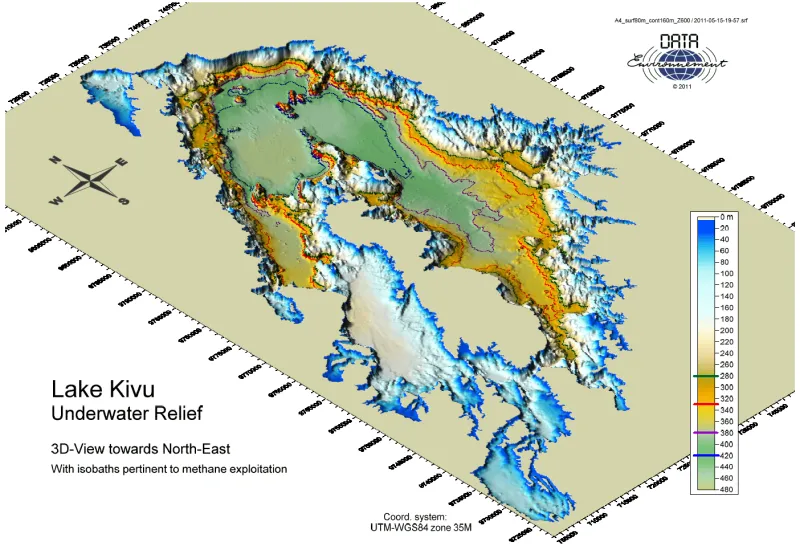
Finally, we considered how to continue holding the chemoclines at their current levels. To achieve this need, we discussed how to evacuate a fraction of the degassed water from deeper resource strata. Counter-intuitively, the best solution may be to re-inject degassed water into the mixolimnion, in the top 60m of the lake. Displacing degassed water can maintain chemoclines in place.
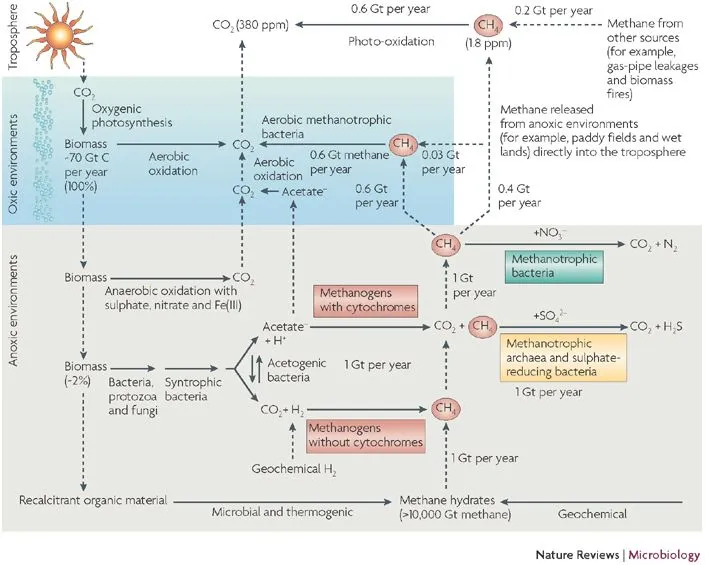
However, it introduces an environmental challenge. The challenge lies in defining how to minimize any safety-driven or environmental impacts on the mixolimnion. Potential toxic effects come from H₂S, from CO₂-induced acidity, and from oxygen depletion caused by CH4 and H₂S.
Defining the role and methods of sustainable commercial gas extraction as the tool that for the foreseeable future, serves to avert a disastrous limnic eruption caused by nature’s continued accumulation of gases in Lake Kivu.
Basins of the Lake